Maps Tool
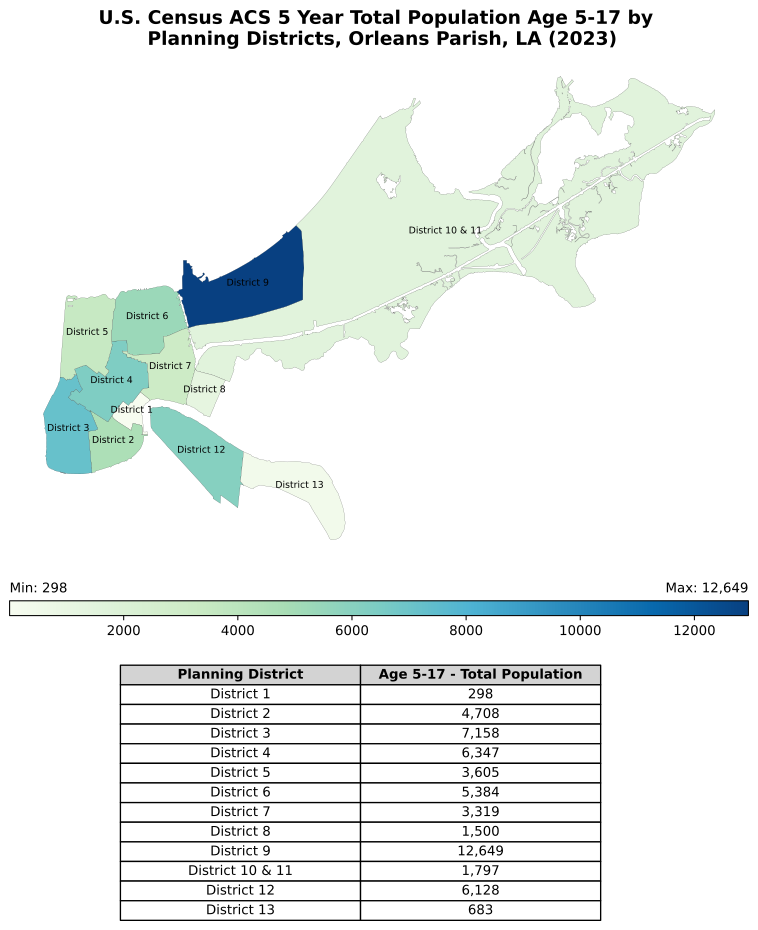
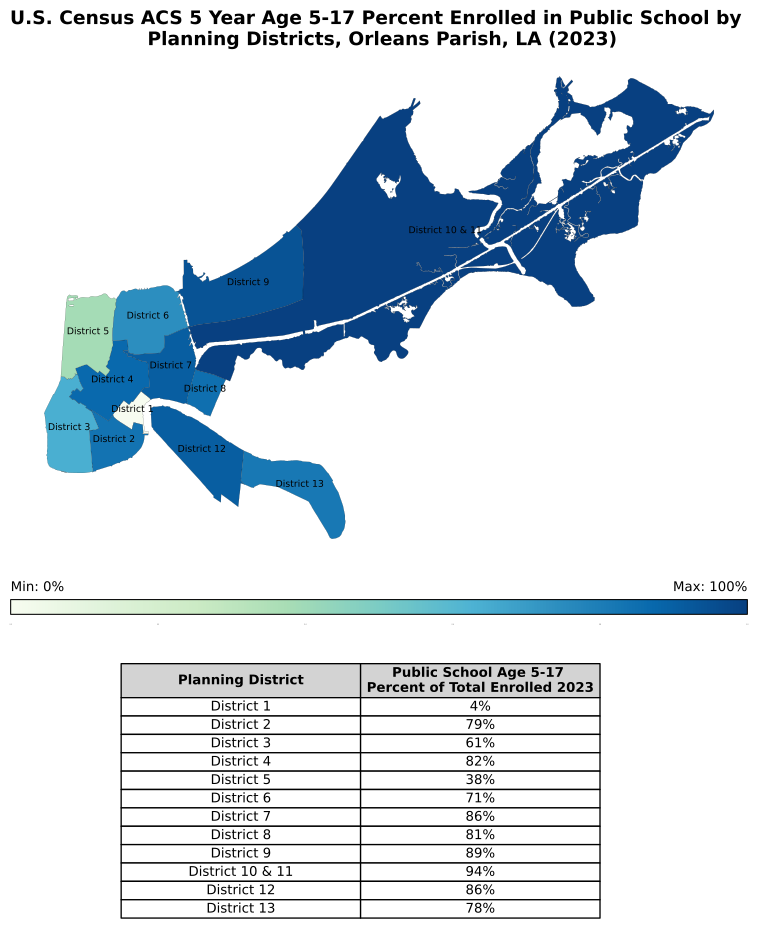
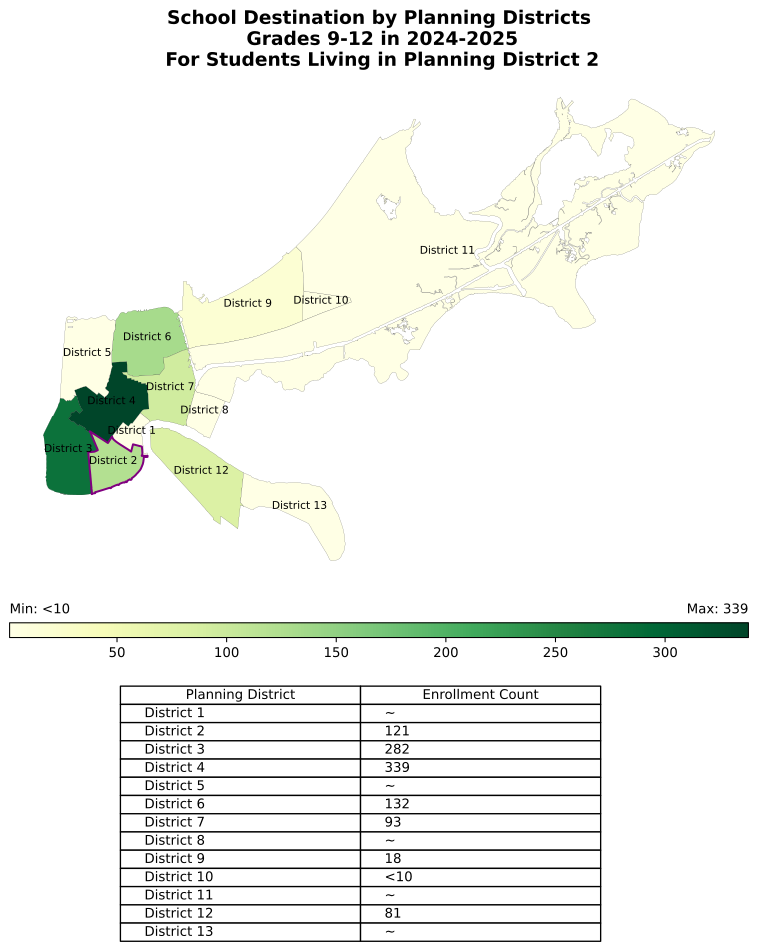
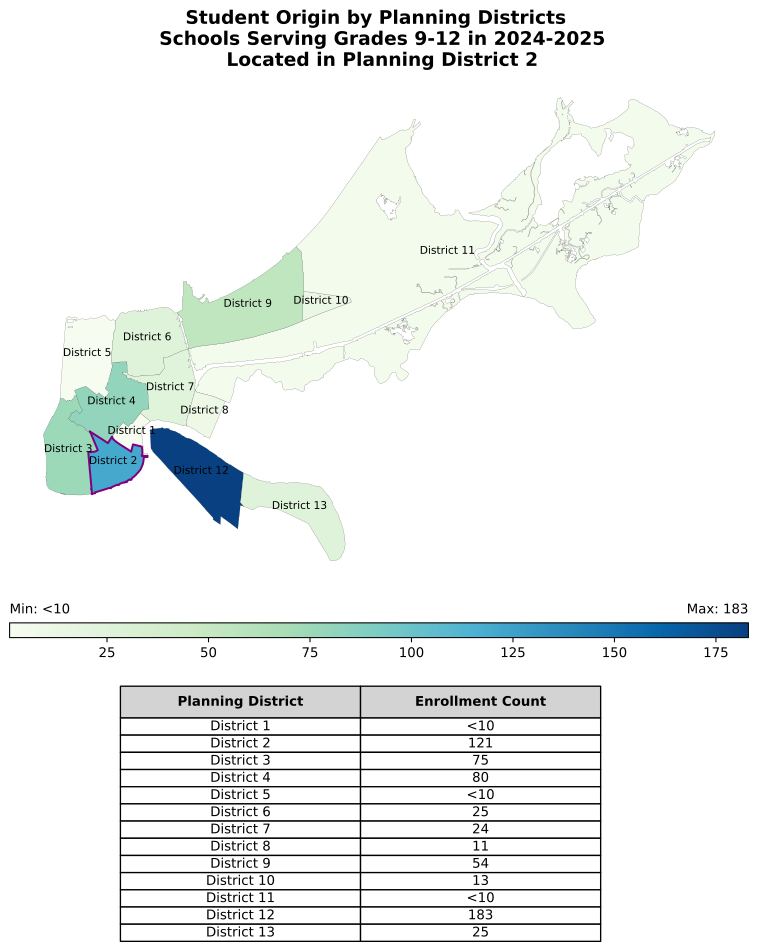
The Maps Tool enables users to visualize and compare geographic patterns in where students live and go to school—drawing on census and enrollment data to support planning and community insight.
Note: student address data may not always reflect a family’s current residence. For data sources, methodology, and caveats, see Additional Information & Caveats.
Additional Information & Caveats
These maps use end-of-year enrollment records from the school year to show geographic patterns in where students live and where they attend school. They are intended to support planning, community insight, and questions about access and enrollment patterns across New Orleans.
Map results are based on data from the NOLA-PS Enrollment System (Salesforce). Because student addresses can change over time—and because this information is privacy-sensitive—these maps should be interpreted with appropriate caution (see below).
Student enrollments and address location
NOLA-PS uses Academic Term Enrollment (ATE) records to represent a student’s enrollment at a school in a specific grade and term. A new ATE record is created when a student changes schools or advances to a new grade.
For this tool, we used the list of active ATE records at the end of the school year, after schools had an opportunity to reconcile end-of-year rosters. Each enrollment record was linked to:
- the student’s grade level
- the school facility location (including geographic coordinates)
- the student’s address and geocoded location (when available)
NOLA-PS also stores geographic fields collected during the NCAP (formerly OneApp) for enrollment priorities and distance calculations (for example: ZIP code, census tract, neighborhood, and planning district). Linking enrollment, facility, and student location data allows us to examine patterns in where students live relative to where they attend school.
Important limitation: addresses may be outdated
Student address and geolocation fields are not continuously refreshed. In many cases, a student’s location data reflects the address on file when a family last updated contact information or completed an NCAP application. If a student moves and the record is not updated, the mapped location may no longer reflect the student’s current residence.
As an example: for students enrolled in the 2024-2025 school year, we found that 64% of enrollments were associated with an application that was two or more years old.
| Application Filled Out | School on Year Application | ATE – Student Count | Percent |
|---|---|---|---|
| 2023 or earlier | 2023-2024 or earlier | 33,348 | 64% |
| 2023-2024 | 2024-2025 | 9,506 | 18% |
| 2024-2025 | 2025-2026 | 9,249 | 18% |
Address updates may occur when families update contact information, when schools update records during enrollment, or when location fields are reprocessed through district workflows. (We are continuing to improve our understanding of how often geolocation fields are refreshed across schools and years.)
Because of household mobility, the safest interpretation is: these maps represent where a student likely lived at the time they applied or enrolled, not necessarily where they lived at the end of the school year.
For context, U.S. Census estimates suggest that approximately 6.9% (3,550) children ages 5–17 moved within Orleans Parish within the last year. (Source: U.S. Census Bureau, ACS 1-year 2024, table ACSST1Y2024.S0701.)
New Orleans neighborhoods and planning districts
The City of New Orleans is commonly described using 13 planning districts and 73 neighborhoods, originally formalized by the City Planning Commission. These boundaries are helpful for describing community geography and planning needs, but they are not always perceived the same way by residents, neighborhood associations, or security districts.
Census tracts and tract changes
Prior to the 2020 Decennial Census, the U.S. Census Bureau redrew census tracts nationwide. In New Orleans, several tracts were split or combined, which changed some geographic boundaries used in public data products.
To standardize geography for this tool, student and facility point data were geocoded and aligned to current boundaries for census tracts, planning districts, and neighborhoods.